
Complete Guide to SMT PCBA Processing Technology
2026-09-28 15:36:38 | Technical Article | Author:Fandou Tech
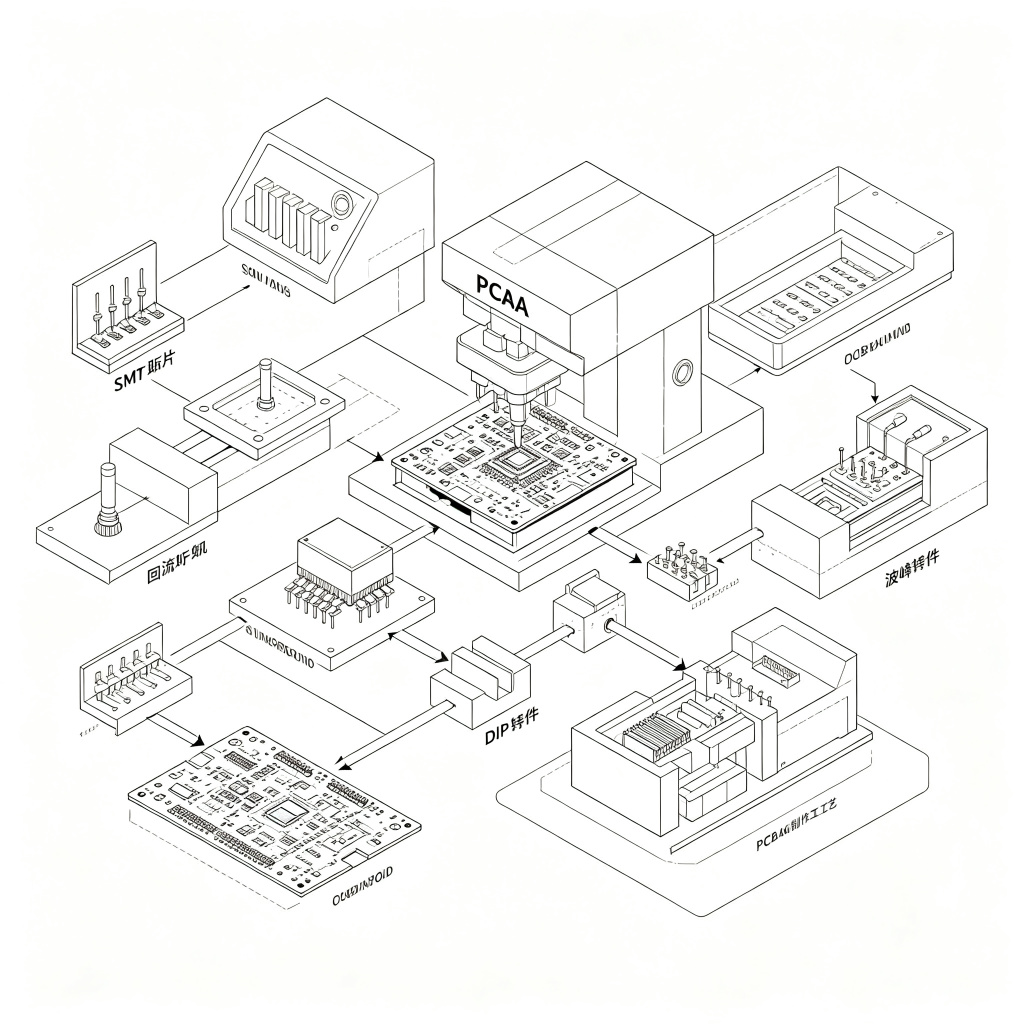
SMT Surface Mount Technology Overview
SMT (Surface Mount Technology) is the core process of modern electronic manufacturing, with advantages such as high assembly density, small size, light weight, high reliability, strong vibration resistance, low solder defect rate, and good high-frequency characteristics.
SMT Process Flow
The complete SMT process includes the following key steps:
- Solder Paste Printing: Printing solder paste onto PCB pads through a stencil, which is the first process and a key factor affecting soldering quality.
- Component Placement: Using high-speed mounters to accurately place surface mount components onto the solder-printed PCB pads.
- Reflow Soldering: Passing the PCB with components through a reflow oven, going through preheating, soaking, reflow, and cooling zones to melt the solder paste and complete soldering.
- AOI Inspection: Automated optical inspection, using vision systems to check solder joint quality, component offset, missing components, reverse polarity, and other defects.
SMT Equipment Requirements
Core equipment for high-quality SMT production includes: fully automatic solder paste printers, high-speed multifunction mounters, lead-free reflow ovens, AOI automated optical inspection machines, and X-Ray inspection equipment.
Quality Control Points
Key quality control points in SMT production include: solder paste thickness control, placement accuracy control, reflow soldering temperature profile optimization, ESD protection, and temperature/humidity control.